
AI fiction is a tricky subject for many human authors, myself included. My feelings on the subject have flared, grown, and finally started to mellow as I’ve gained a tad more knowledge.
I have seen and read some troubling social posts from both pro and anti-AI camps in recent times, and I think it’s worth taking a breath and putting some pieces together.
Why Do Human Authors Hate AI?
Firstly, not all of us hate it. But consider how AI writing was brought to our attention at scale (this was my experience, at least).
When I first started to pay attention to the whole AI controversy, it was through jarring announcements that most of us had had our books pirated, fed into LLMs, and were in no way consulted or compensated by mega-rich corporations that were using our illegally acquired hard work to put us out of business.
As first impressions go, it was not good.
In the past week, I saw an Instagram post by a disheartened author who has seen her marketing grow less effective and her sales decline. Why? She suspects the deluge of AI written books that make visibility even more challenging (and it has never been easy).
Is she mistaken? No. The more stuff you have crammed into a room, the harder it is to find a specific item. The more books there are to sift through, the harder it is to get yours noticed. High competition is a marketing headache that has always plagued every form of business.
How bad is AI?
Gonna go out on a limb here and say that AI, as such, isn’t bad. Let’s be clear: AI isn’t taking your job, it isn’t stealing your readers, it isn’t bloating the marketplace.
Humans are doing that.
AI is sitting in the corner waiting for a human to give it a task. The problem, as ever, is lazy and money-hungry people who have found something to misuse for personal gain.
The point is that we aren’t being replaced by technology; we’re being victimized by a-holes. That isn’t really great news, but it helps put the fear into perspective. Scamming, stealing, and tricking the public aren’t new tactics.
The AI paradox
There’s a reason that people who put out AI-generated books don’t reveal that they didn’t write the book themselves: it’s not impressive, it’s embarrassing, and it’s not good for business.
The reason for that is that no one needs an AI author. If a reader is content to read computer-generated fluff with no life experience, emotion, or innovation, they can go to any AI model and generate their own. The quality will be the same and the price will be free.
Someone relying entirely on prompts instead of writing isn’t demonstrating writing ability, they’re acting as a middleman. Someone who isn’t specifically contributing to the project and is just adding their fees to pocket some easy money.
As for the second social post I mentioned, I saw an ad for some “Become a published author!” mumbo-jumbo. It promised that in exchange for a single payment of $60, the ‘author’ could type in a basic premise and the AI would generate the entire tale, and the cover, in 30-90 minutes. One commenter wanted to buy it as a gift for his wife. So, a little novelty for someone who obviously can’t write but wants to play pretend.
Wow. Where to begin?
AI is like a microwave
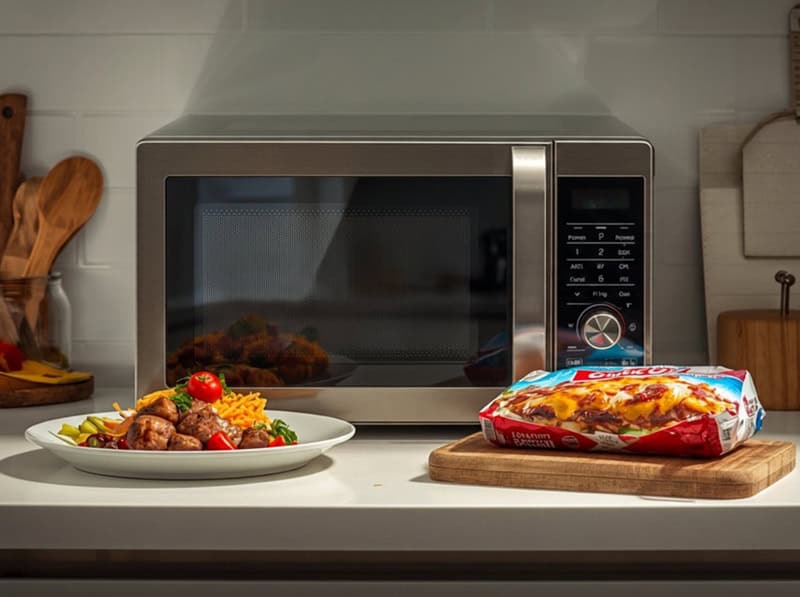
When it comes to microwaves, feelings are mixed. Most of us own one; some use them daily, others only break them out to make popcorn.
Now, microwaves are handy; they can make life easier and save a lot of time. But no one is going to brag that they made an entire three course meal in their microwave.
Why? Because it’s not impressive.
Would you expect to go to even a reasonably nice restaurant and be served a microwaved meal? Would you pay the same money for it as a meal cooked from scratch by an actual cook who does it for a living?
What if the waiter assured you that you wouldn’t be able to tell the difference? What if it were the fanciest new microwave? Yeah, no thank you.
The microwave continues to be a useful piece of equipment; that is not the issue. The issue is the lazy and misleading person who is trying to charge you the same money for a meal they didn’t make. They are deliberately concealing the fact that their product is artificially produced because they know you wouldn’t pay a premium if you knew that.
Here’s an example for you. Last year I was watching the women’s cricket (I live in Australia now, and cricket’s huge here). The commentators were discussing one of the bright and promising young players, and one of them said that they’d heard she could solve a Rubik’s cube in less than 20 seconds.
The other commentator was impressed, as was I. What a clever person, and good at sport too. How talented!
At the next game, however, this player was interviewed on the sidelines. The reporter mentioned the skill, and then revealed that the player ‘solved’ it with an app on her phone.
Immediately less impressed, I went from thinking how talented this chick was to rolling my eyes that she had been praised for following step-by-step directions.
Help for human writers
For those of us who can proudly and honestly say that we’ve never put our name on a book we didn’t write, there is hope.
The microwave didn’t kill fine dining, and it didn’t spell the end of professional chefs or passionate home cooks. Those skills have never vanished, but they have become better respected because not everyone can prepare a delicious meal, but everybody enjoys consuming them.
Let’s continue to be honest and point out that humans can write terrible books too. Just like a from-scratch meal can still taste disgusting if the cook isn’t good.
If you are a human writer and can turn out a good book, you are becoming increasingly rare. This is a growing issue because a lot of aspiring authors will be tempted to rely too heavily on AI. As a result, those ones may never reach their full potential because the only way to improve as a writer is to write.
If you are a human writer who is still in the early stages of developing your skills, don’t be sucked in by impatience or greed. Something cranked out by a computer can be very good, but it will never be as soul-stirring as something made by human hands.
AI art is handy and can look great. But have you ever watched a skilled artist sketch a picture by hand? The feelings that it inspires are very different, and you won’t fully understand that until you experience it.
So, if you are one of the marvelous people who want to do your own heavy lifting, stay with it! Do the work and become really good at it; your skills will become highly prized in the end.
Where is all this leading us?
None of us can say what the future will bring, but I have a few theories.
Good quality AI is going to become expensive. Right now there are good and useful options that are available for free or at least cheap. Remember that AI is in a harvesting stage at the moment. The companies that are developing it need a lot of input to train and teach the models. Giving people easy access to enthusiastically fill it with suggestions, ideas, requests, and other inputs is an ingenious way to refine the system while also making the customer reliant on the technology.
But it won’t always be that way. All this access and reshaping of daily life is leading us somewhere. And that isn’t a dark and dreary apocalyptic place, hopefully. It’s the next shift in how the world functions and how technology influences our lives.
Do you think that’s always going to be given away? Not a chance, not the really good stuff. The tech will become pricey, and that’s not a bad thing. Once AI slop isn’t cheap to produce, the opportunists will travel on to something else, because peddling a slapped-together product for maximum profit is only viable when it’s cheap to produce.
Authors who fully shun AI will be left behind. There is a big difference between utilizing AI as a tool and letting it write your book for you. This is where stubbornness and inflexibility may cost us some passionate writers, and that is scary. If an author refuses to grow and utilize advancements that their peers are using, they won’t be able to keep up.
I write my own books. I know how to write and I enjoy writing; I don’t need anything or anyone to do that for me. But I hate writing book blurbs; I don’t excel at marketing copy, and I don’t have hours to waste researching keywords, hashtags, and whatever else.
I also don’t have the budget to pay someone to design all my concept art and social media graphics. I am happy to use AI for those sorts of things.
Book writing and book covers are in a totally different league, those I don’t touch AI for.
As for the authors who rankle at the mere mention of those infamous initials, that’s where I was when it first came to my attention. I viewed it as a threat and an enemy. Now? It’s a tool, one that can do damage if used carelessly, but can be a great asset if wielded properly and responsibly.
The fact is, if you’re reading this, you’re on the internet. You may have used a search engine, you might be subscribed to my website, you might have found me on Pinterest or Instagram. You are using AI. That is okay.
We’ve embraced other technology that enhances and speeds up our writing. The internet for research. The pen, which became the typewriter, which became the word processor, and so on.
Returning to the food analogy, I wouldn’t consider a fully microwaved meal to be home cooking. But what if the cook wanted to save some time and bought vegetables that were already cleaned and cut? Say they did everything except chop the carrots and onions, is that home cooked? Yes, I would say so.
Human-written books will become more valued. To an extent, this is already the case, but I think more readers will come to the party as time goes on. Humans admire other humans who are good at what they do. If you hear someone sing beautifully, aren’t you more impressed than if they’re lip-syncing? Yes, because anyone can pretend. That’s not a display of ability.
With AI books now quite prevalent, it won’t be long before people realize they are paying restaurant prices for bland, mass-produced food that looks nothing like the picture on the box. Will AI books disappear? Well, you can still buy frozen Salisbury steak with potato flavored ‘potato’, so probably not.
That’s not a career-ending fact. There are many people who won’t eat artificial stuff because they know they can do better. Even fewer people will pay top dollar for something no one worked hard on.
But why does anyone buy frozen meals then? Convenience. And that is another key point. For the reader, it makes no difference to their time or wallet if the book they buy took months to write or was cranked out cheap and dirty by any random poser.
They don’t get the book cheaper because it’s AI; they get neon macaroni and cheese that’s still cold in the middle for the same price as a fresh, piled-high turkey sandwich from a family-owned cafe.
People will hopefully realize that and stop letting themselves get ripped off.
The novelty will wear off, and a smaller number will be left standing. Most get rich quick schemes fizzle out. And, speaking as an actual human author who puts time and effort into her books, not many people get rich from writing. Not until they’ve put in years of hard work.
Yes, there will be the occasional examples of ones that make a lot of money through sheer volume. Whatever. We can’t do anything about those sorts of people, and we really don’t need to. Even these examples will ebb a bit when producing AI books becomes more expensive.
Kindle Unlimited will become a universal toilet. One of my more controversial predictions, because it’s pretty much already come true. Most, although not all, AI slop will nestle its fetid buttocks into the welcoming throne of KU.
Amazon does provide a lot of exposure to authors; I’m not knocking them here. But when it comes to books, they have virtually no standards outside of legally prohibited yuck. That is a vicious catch-22 because so much of their platform is run by AI.
They have little by way of quality standards because they have millions of books uploaded to the platform every year. At the same time, they have millions of books uploaded because they have low standards. And round and round it goes.
The upside is that it corrals a lot of the slop, because simple and cranked-out fast books are designed to profit off KU readers. There are a lot of great books on KU as well, but the way it’s structured leaves it open to exploitation.
The exclusivity clause works for us here because it at least stops those books from flooding other platforms to the same extent. Not perfect, but better than nothing.
The future for a writer living with AI

You can’t stop progress, and that’s what AI is. Don’t make yourself sick over it; find the ways that you can leverage it without surrendering your self-respect and keep writing.
We are basically out of the age where authors learn to write without some degree of AI involvement. Those of us who are still here and writing have a skill set that newer authors may never fully hone. I do believe that we will stand apart for that, but it doesn’t mean we can’t utilize these new tools. And we will still have great writers emerge; they may just go about their work differently.
There will still be a lot of mediocre stuff floating around, but there always has been. Ultimately, we need readers with higher standards and authors who are willing to do their own thinking.
That’s not impossible, provided we don’t give up. As readers and writers, we’re better than the waves of greedy cash-grab books that have cluttered the market. Remember that, demand better and enjoy the uniquely human art of storytelling.
Have a thought to share?