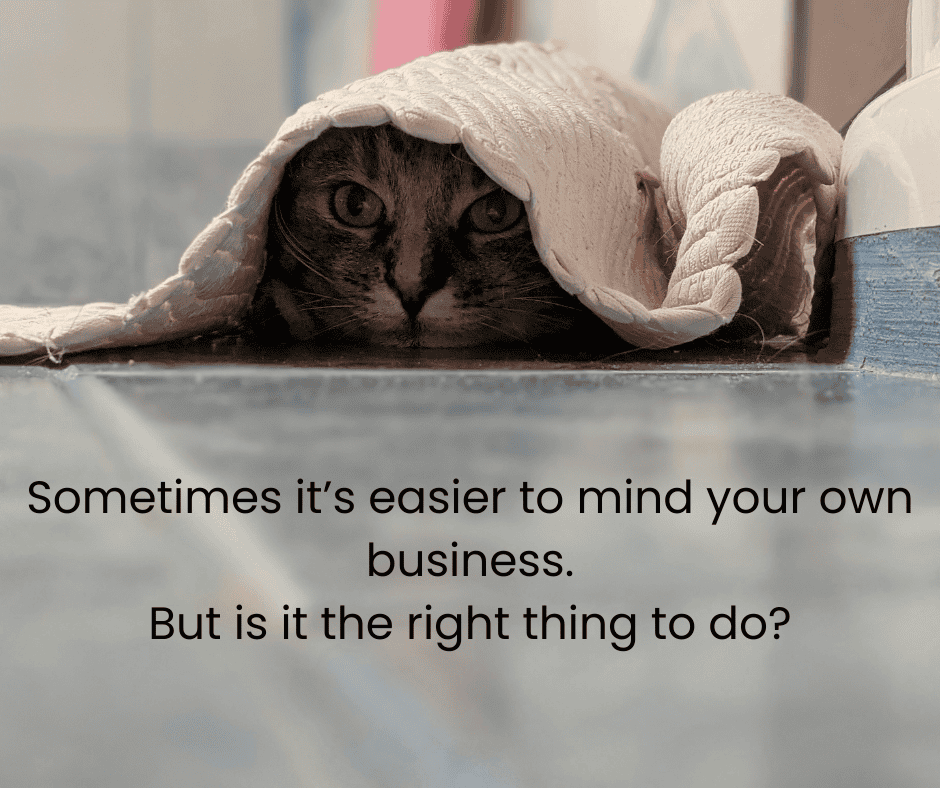
Help or hinder. Win or lose. Trick or treat. I find myself with another in a list of weird and possibly stupid problems. Hear me out, please.
I’ll start by saying that every author makes mistakes. This goes for the traditionally published author and the self-published indie warrior alike.
One of the reasons the trad published authors get the lion’s share of the respect and presumed credibility, is that most of them have a team of people that work hard to keep them from looking stupid. That’s great, but it’s a hard gig to land and there are expensive trade-offs.
Who helps the small-time authors?
If you’re a wee little indie like myself, you don’t have legions of experts sorting out book covers, formatting or editing for you. There are no professional headshots or glossy websites unless you organize it yourself. You learn it and do it all. And regardless of whether you opt to publish wide or exclusive, you have to learn the ropes.
Now, the result can be a rather handy new skill set. Or oppressive bitterness that can turn a perfectly nice person into a sarcastic and fire-breathing forum-dwelling dragon. (Slight exaggeration, but some of those people are needlessly mean.)
There are also hybrid and small-scale publishers. I don’t pretend to know the ins and outs of all these options, but from what I’ve observed these don’t appear to do as much for the author as they perhaps could. Mostly, they seem to give them a company logo to put on their books and the ability to drop phrases like “I heard from my publisher the other day” into casual conversation.
I’ve read many books from small presses and in some cases, if there was an editor on staff, they…well, they weren’t very good.
Examples where help was lacking
I’ve seen entire paragraphs repeated, the perspective change from first to third person for a sentence or two before changing back, the main character’s name misspelled. Stuff that really could have been caught in a basic proofread.
My sister reads a lot of those sorts of books and, since she’s one of my proofreaders and knows what gaffes to look for, she often regales me with tales of harrowing typos and plots with more holes than a sieve. One of her favorite moments was when a villain was brought in at the end of the book with no prior warning.
By that I mean the character wasn’t mentioned at all before. There was some nefarious scoundrel afoot when the plot needed it but the culprit wasn’t there to interact with anyone at any point, ever. Apparently, the reader is later told that he was a servant and was there all along but went completely unnoticed. Completely. Okay, I guess we can go with that.
Now, I’m assuming the author had planned to go back and weave this character through a few earlier chapters. She evidently forgot, she may have been very busy, and no one mentioned it to her before the book went out to the public.
Everyone makes mistakes and everyone has a bad day. But if my bookish big sister, who literally beta reads in exchange for coffee and peanut M&Ms can spot a flaw like that, surely a half-decent professional editor can too. So, I must assume that some publishing houses are more dedicated than others.
Do all types of authors need help?
Yes, they do. Everyone needs help sometimes and that definitely includes any sort of author. These questions arise though: will trying to help do more harm than good and, if not, who should do it?
As I continue to grow in my journey as a self-published author, I continue to make mistakes. I’m actually quite good at making mistakes, probably due to practice. But every time that I do, and learn something as a result, I start to notice if others are doing something similar. So, in this post I’m considering the etiquette of offering unsolicited advice.

How much help is actually wanted?
That’s a tough one. We probably shouldn’t simply guess and it seems unkind to ignore someone’s issue if we’re in a position to help them. Helping without offending or looking like a big buttinski is the challenge. We also don’t know how well the person in question will take the feedback. What ever shall we do?
As I write this, I’m hoping to glean some insights from other authors, readers and anyone else who’s game to offer an opinion. What sort of answers am I anticipating people giving (even if only quietly to themselves and not online)?
Honestly, I think everyone will say to help where you can. Most will say that publishing is hard enough and no one needs to walk around, unwarned, with their skirt caught up in their undies or toilet paper stuck to their shoe.
That’s the view I’m leaning towards as well, but actually doing it is another matter.
How to tell someone they have a problem
If it’s a stranger, I’d probably just mind my own business or maybe mention it in a review in hopes that they’ll see it and fix it.
I’ll be honest, I’ve read a few books by authors I’m chummy with and found an odd typo here or there that I haven’t pointed out to them. I’m sure my books have a typo or two despite how many times they’ve been checked and edited. That’s not a problem reserved for indies, traditionally published authors also have errors slip through the cracks.
I didn’t say anything because, firstly, no one asked me to proofread for them and, secondly, I don’t want to butt in. Is that wrong, selfish or cowardly? I hope not, but sometimes we just keep our observations to ourselves.
Realistically, would telling someone they misspelled a word or used the incorrect tense change their life and skyrocket them to success? Probably not.
Would it make them think that an upstart nobody like me is trying to poke my nose in and maybe I should stick to sorting out my own books? Possibly, and that’s scary.
You still haven’t spoken up
Yes, I know that. What brought all of this up was that I tried to look up an author friend and I couldn’t find them. I mean, I typed in their exact website name and it didn’t come up in the search engine. So, the SEO is not working and she possibly doesn’t know that she’s nearly impossible to find. I only found her website by following her Instagram link.
It reminded me of when I first set up my own website. It took ages for me to rank for my own bloody name. I had to verify my website with Google and jump through a few other hoops. That along with regular posting, SEO optimizing and so forth finally earned me the privilege of popping up when I literally type in Camille Sharp Books. It took a while though, and there were steps I had to put in place.
What if this author doesn’t know that? What if they have no idea that they can twiddle some knobs in the background that might help their website start ranking better? Ahh! What do you do in that situation?

Bawk bawk bawk!
Yes, I’ll admit that so far chickening out has worked brilliantly for me.
I suppose the main thing that holds me back is that I’m new to the publishing game myself. I’ve also offered help in the past (not author-related help, just generally) only to have it bite me in the nether-bits. It’s entirely possible that this author knows far more of the website ins and outs than I do and no one asked me anyway.
Apart from that, I’m fairly confident that if I fire off an email saying ‘I noticed an issue with your website, do you have anyone looking after your SEO’, I’ll end up in the darkest corner of the spam dungeon.
What if it was me?
Would I want someone to tell me if I’d done something that was making me look stupid? Yes, if there was something I could do about it. Would I care how long they’d been published or interacting on social media? No, I wouldn’t, particularly if they were correct and were simply trying to help me. But I would want them to be polite and respectful about it.
It’s a bit like being at a party and deciding not to tell someone they have food in their teeth because I’m not a dentist. Sometimes problems are stupid and shouldn’t really be problems at all.
So, I’m going to leave this one on an ambiguous note. I don’t have a solution that I can convey with any confidence. Therefore I’m going to have to give one of those obnoxious every-situation-is-different answers, because it’s true.
I’d say help your friends when you know it would help, and stay out of it when you know it would just ruffle feathers. Is that the best course of action? I have no idea, but sometimes discretion is the best course while other times speaking up is the right thing to do. It’s for each of us to decide.
Have a thought to share?